

HELIOS Inspires the Next Generation: Organic Electronics Comes to Lviv Region Schools
Bringing Cutting-Edge Science to Future Innovators!
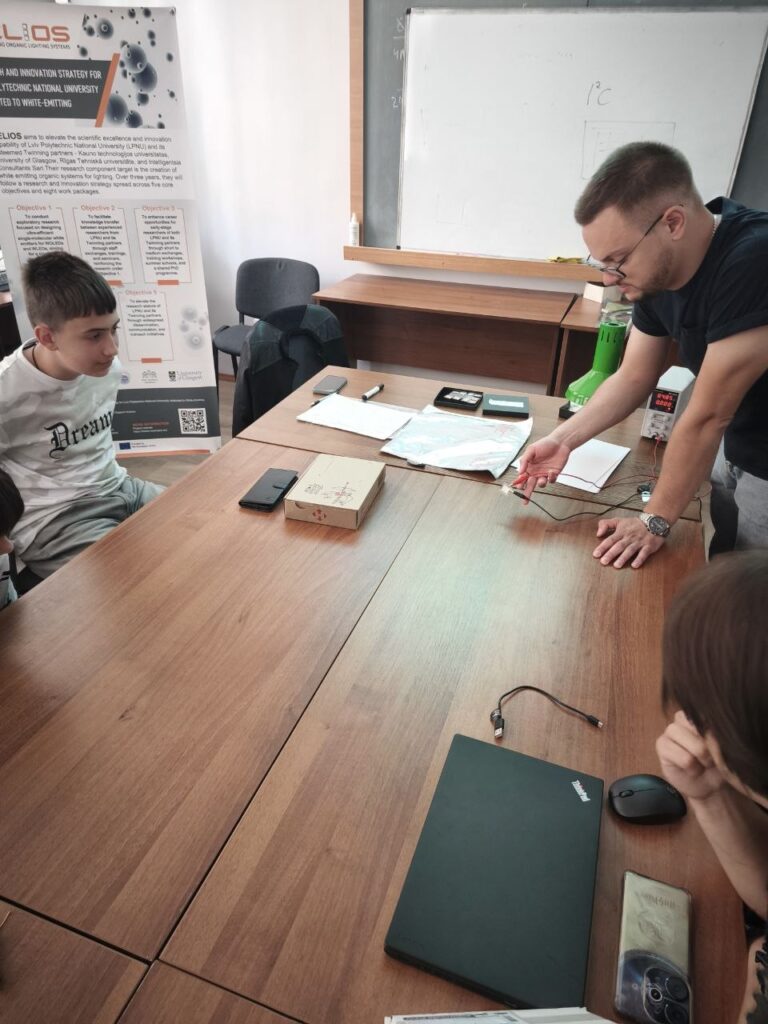
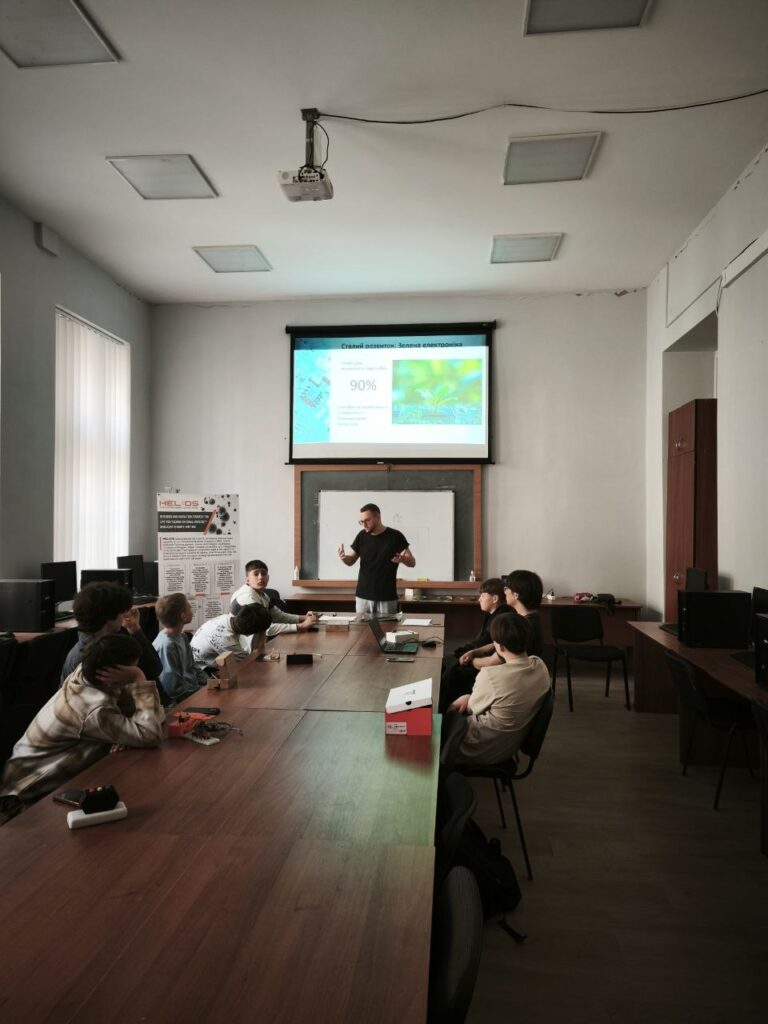
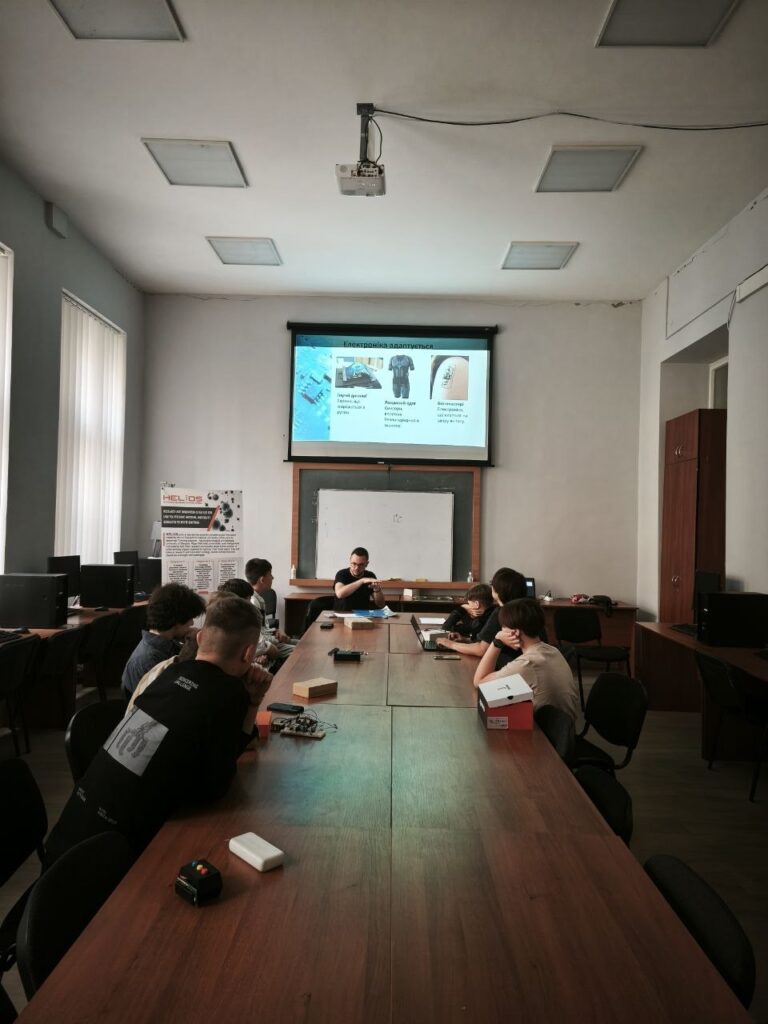
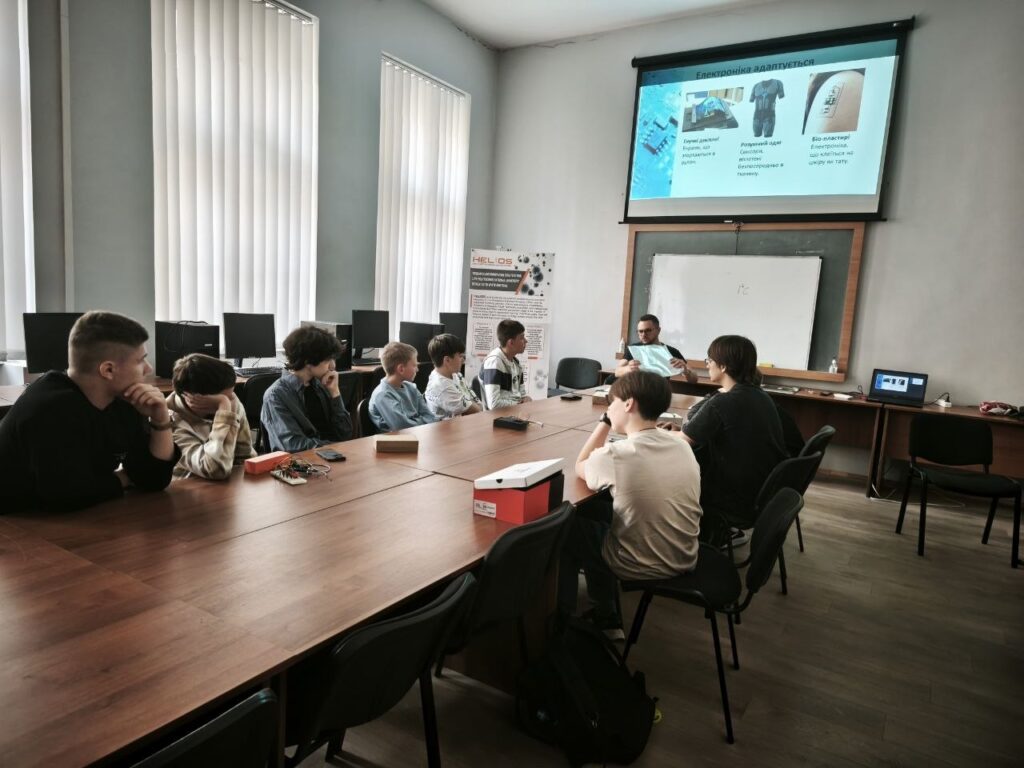
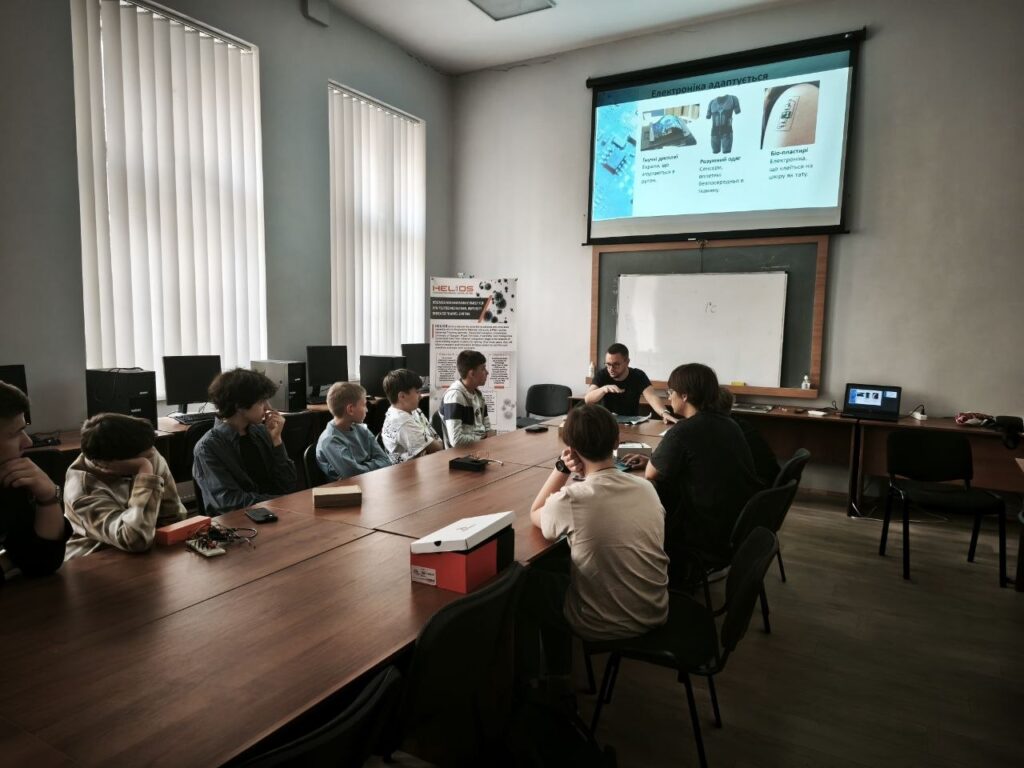
As part of the outreach activities of the HELIOS project, Dr. Serhii Melnykov, PhD, Associate Professor at the Department of Electronic Engineering at Lviv Polytechnic National University, delivered an engaging educational session for school students in grades 7–11 from across the Lviv region. The lesson introduced young learners to some of the most promising directions in modern electronics — fields that are already shaping our technological future: organic electronics and energy-efficient OLED-based lighting systems.
Discovering the HELIOS Project
At the heart of the session was an introduction to HELIOS — an international research project carried out at the Department of Electronic Engineering with the support of the Horizon Europe programme. Students learned how international scientific collaboration works and how researchers across Europe combine their expertise to develop innovative solutions in organic electronics. Key topics included:
- Next-generation organic light-emitting systems and the research driving them forward.
- High-efficiency white organic LEDs (WOLEDs and WLEDs) as the core focus of the HELIOS research effort.
- International teamwork, uniting Lviv Polytechnic with leading European universities.
The Science of White Light
A central part of the discussion was dedicated to how researchers design high-efficiency white-emitting organic systems that bring together three key advantages:
- Energy efficiency — producing more light while consuming less power.
- Eco-friendliness — offering more sustainable alternatives to conventional lighting.
- New possibilities — enabling flexible, modern, and versatile lighting technologies.
The goal of this work is ambitious: to achieve a meaningful breakthrough in the cost and performance of solid-state lighting, making advanced, sustainable lighting more accessible to everyone.
Seeing Science Up Close
What truly captured the students’ attention was the chance to move beyond theory. Dr. Melnykov demonstrated experimental WOLED structures — real research samples developed as part of the project’s work. This hands-on moment transformed abstract scientific concepts into something tangible, allowing the students to connect what they had learned with the actual practice of research — and perhaps imagine themselves, one day, working in a laboratory of their own.
Why Outreach Matters
Engaging young people is far more than an enjoyable addition to a research project — it is an investment in the future. By sparking curiosity and showing students that world-class science is happening close to home, sessions like these help cultivate the innovators, engineers, and researchers of tomorrow. For HELIOS, public engagement is a core commitment alongside its scientific objectives.
Looking Ahead
Supported by the Horizon Europe Framework Programme, the HELIOS project brings together researchers from Lviv Polytechnic National University and leading European universities to advance innovative solutions in organic electronics and white-emitting organic lighting systems. The future of lighting is organic, energy-efficient, and sustainable — and thanks to initiatives like HELIOS, that future is being built right here, with the active participation of the young people who will carry it forward.
We extend our best wishes to all HELIOS participants and look forward to welcoming even more curious minds to discover the science behind the light!
We acknowledge the support of the European Union under Horizon Europe for the HELIOS project (Grant Agreement 101155017).

Our Contact
+38(032) 258-25-81
+38(032) 258-21-73
ele.dept@lpnu.ua
St. George's Square 1, room 118
79013 Lviv, UKRAINE